angrily
US /ˈæŋɡrɪlɪ/
・UK /'æŋɡrəlɪ/
A2 初級
adv.副詞忿怒地 ; 忿然 ; 憤怒地
He shouted angrily at the boy for breaking his bat
影片字幕
這個不能吃,那個也不能吃!為什麼我們會「過敏」? (The Real Reason Why You Have Allergies)

- And then they just lie and wait - angrily.
肥大細胞是一個巨大、臃腫的傢伙,裡面充滿了組胺和其他噁心的化學物質。
- And then they just lie and wait - angrily.
它們會吸附周圍漂浮的 IgE,並把它們覆蓋在自己身上,就像沒有保險栓的憤怒刺蝟手榴彈一樣。

B4L7 閱讀技巧大公開! (B4L7 Reading)

- He treated him terribly, one student said angrily.
「這名惡霸叫他女孩。
- He treated him terribly,” one student said angrily.
他對待他的態度糟糕透了。」一名學生氣憤地說。

受傷的人如何尋求更進一步的懲罰? (How Wounded People Seek Out further Punishment)
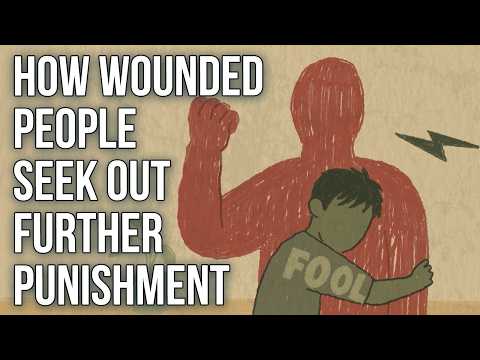
- It's just that for us, home was a place of grief and persecution. It's easy enough to see why children put up with poor treatment. They're born radically powerless. They can't run away. They are utterly at the mercy of others. They can't even think especially straight. What they must do, above all else, is adapt. Which in practice means learning to put up with poor treatment. They have to develop an advanced skill at not noticing quite how awful things are, an expertise at being unfazed by cruelty and neglect. Children in deprived circumstances tend to be geniuses at looking away, disassociating and making light of things. Of course, it might not be perfect that their father screams at them constantly, but there are some interesting shows on television and there's a really fascinating bit of the garden to explore in the morning. You can climb up the big tree and imagine it's a little house. And of course, ideally their mother wouldn't be so mocking and disloyal. But that's just the way things are, neither more or less sad than the fact it's often raining and there's a lot of homework to do. In any case, the bad treatment almost certainly has to do with something that they, the child, have done wrong. Badly treated children tend to take a compulsively generous view of those who injure them. Obviously, they aren't nasty on purpose. That would make no sense. Clearly, their ostensible brutality has sound explanations. It must be because they, the child, is in the wrong. That's why they're being neglected. That's why they've been declared fools. That's why they're being bullied. It's a great deal easier to believe that the parent is tough, yet fundamentally right, rather than gratuitously callous and unjustifiably hostile. In other words, what a bad childhood trains us to do, above all else, is to indulge meanness. The muscle that normally functions to repel attacks has had to be starved and has atrophied. In order to survive, we had to lose the ability to work out what was good and bad for us, lest we discover that we spent 18 years in the company of fiends. What this means for our futures is that we will be extremely poor at discerning when the partners we let into our lives cross the border into selfishness and malevolence. We'll continue under a narcoleptic command not to notice that we're being robbed and deceived. We'll be as blind to the blows now as we were then. For a long time, it simply won't occur to us to wonder why we've ended up paying for everything for the partner, or why they're unreliable in their promises, or constantly prioritise their friends over us, or are angrily defensive whenever we raise a complaint. We will simply, as we had to early on, fall into line and invent elaborate explanations for their behaviour. They're good, but they're tired. They're durable, but under pressure at work. They're fierce, but compensating for their childhood traumas, for which we have a lot of sympathy. Anything other than the more straightforward conclusion, we've fallen in with unconcerned egoists. We shouldn't compound our disloyalty towards ourselves by feeling, on top of everything else, ashamed for our tolerance. It isn't weakness, it's a survival strategy from childhood that served a very sensible purpose then but is liable to be ruining our lives now. To wake ourselves up, we need to consider our choices as if someone else had made them. We might wonder what we would advise a friend to do if they were in our situation. And through such a lens, we might start to perceive that the treatment we're facing isn't, as we've long thought, a sign of our partner's depth or complexity, but in the end, something much more humble, evidence that we need to get away. But this will be only a momentary liberation until we can understand the more fundamental issue, that the muscle most people use to eject poison has withered because of a distinctive history. We need to reverse the direction of our psychological fate. Our early suffering should not condemn us to yet more pain. It is what gives us an especially powerful claim on original sources of kindness, tenderness and calm.
只是對我們來說,家是一個充滿悲傷和迫害的地方。很容易理解為什麼孩子們要忍受惡劣的待遇。他們生來就毫無力量他們無法逃避。他們完全任由他人擺佈。他們甚至連思考的能力都沒有他們必須做的,最重要的,就是適應。在實踐中,這意味著要學會忍受惡劣的待遇。他們必須發展出一種高級技能,即不去注意事情有多糟糕,擅長對殘忍和忽視不為所動。生活在貧困環境中的孩子往往是睜一隻眼閉一隻眼、脫離現實和輕描淡寫的天才。當然,他們的父親經常對他們大吼大叫,這可能並不完美,但電視上有一些有趣的節目,而且早上可以去花園裡探索一個非常迷人的地方
- For a long time, it simply won't occur to us to wonder why we've ended up paying for everything for the partner—or why they're unreliable in their promises—or constantly prioritize their friends over us—or are angrily defensive whenever we raise a complaint.
愛麗絲夢遊仙境|路易斯·卡羅|完整有聲書|全配音|未刪減版 (Alice's Adventures in Wonderland Audiobook by Lewis Caroll, Complete, Full cast & Unabridged)

- 'I'll try the whole cause and condemn you to death.' 'You are not attending,' said the mouse to Alice severely, 'what are you thinking of?' 'I beg your pardon,' said Alice very humbly, 'you had got to the fifth bend, I think.' 'I had not,' cried the mouse sharply and very angrily.
C 和 D,」她小聲補充,半是害怕牠又會生氣。
- 'I had NOT!' cried the Mouse, sharply and very angrily.
「我沒有!」老鼠尖銳且非常生氣地喊道。